
By Robin Carr
What does it mean to see yourself clearly after a brain injury has changed everything?
That question was at the heart of a remarkable event at Centre for Neuro Skills (CNS) in Irving, Texas, on Wednesday, July 15. In partnership with the Dallas Museum of Art (DMA), CNS hosted an art showcase where patients recovering from traumatic brain injuries, strokes, and other acquired brain injuries painted their own self-portraits. How they saw themselves. On canvas.
The walls of the CNS clinic were transformed into a gallery, each portrait labeled with the artist’s first name.
Check out: KRLD News Radio
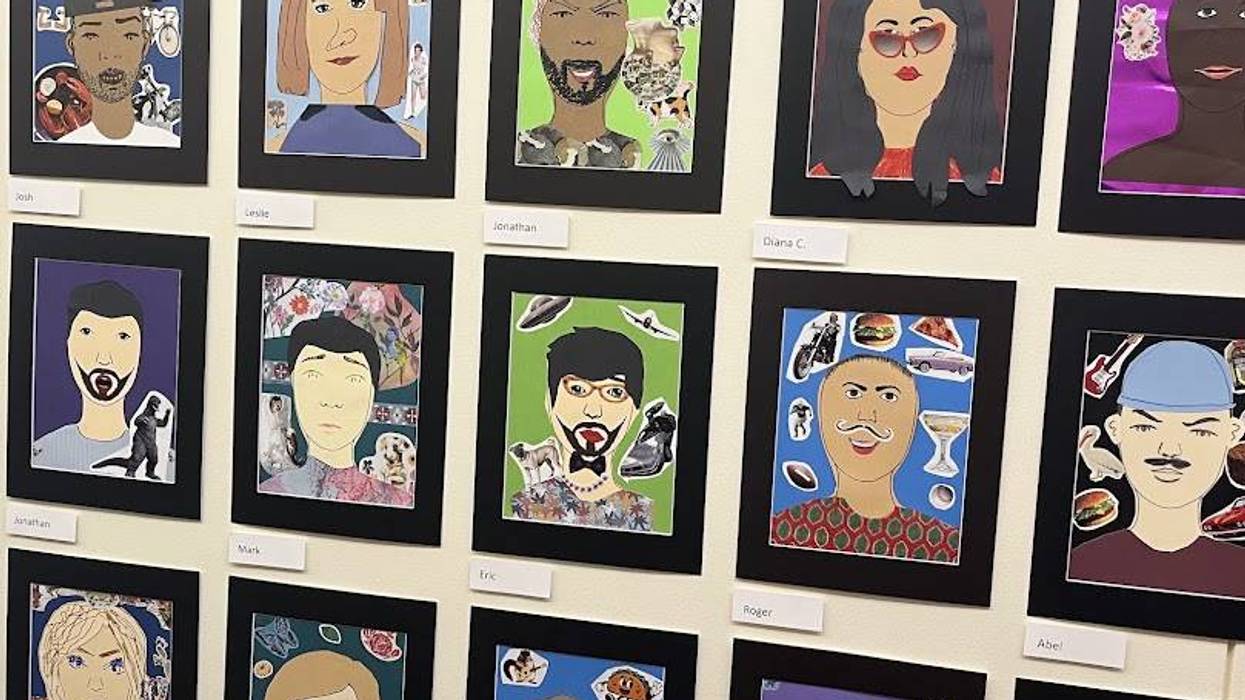
“What You See Is What They Want You to Know”
“In each portrait, you’ll see patients sharing how they want you to see them,” said Jay Meaders, CNS Director of Residential Rehabilitation. “What you see on the wall is what they want you to know.”
The self-portrait format was deliberate. Brain injury alters how patients see themselves — their abilities, their identity, their place in the world. The creative process asked each patient to deal with that question.
“They could engage in a way where they got to choose different pieces of art to represent how they want to be seen,” Meaders explained. “‘Who am I? Where am I in my stage of recovery? How do people see me, and how do I want them to see me?’ What does that really mean as they put it together piece by piece?”
Some painted musical instruments. Others chose sports teams, favorite foods, pets or activities like fishing and basketball. One patient, Eldridge Roberts, included the Dallas Cowboys and his love of cooking. “This is who I am,” Roberts said. “I don’t feel bad because I had a stroke. Things happen.”
Roberts also shared his remarkable journey: since coming to CNS, he has progressed from a wheelchair to a walker. He credits the self-portrait project as part of that journey. “It helps me advance and get back to where I was. I love it. Thank God for a place like this.”
The Science Behind the Brushstroke
Art therapy is not supplemental care. It is clinical. The research is unambiguous:
- Just 45 minutes of art-making has been shown to reduce cortisol — the body’s primary stress hormone —up to 75%.
- A 2025 meta-analysis found that painting therapy produced a statistically significant reduction in depressive symptoms, stronger than other creative modalities tested.
- A 2025 study in Nature Mental Health found that group arts interventions reduced both depression and anxiety.
- Peer-reviewed research published in Frontiers in Psychology (2025) found that art therapy can activate neural pathways involved in emotion regulation and self-identity, helping patients rebuild a sense of self.
Meaders put it plainly: “When you’re looking at firing new connections and neuroplasticity, art therapy and recreation therapy really engage parts of your brain that other types of activity don’t.”
A Partnership Built for Access
This was the first collaboration between CNS and the Dallas Museum of Art. Melissa Brito-Alvarez, the DMA’s Manager of Access Programs, said the museum began with workshops to help participants develop ideas and refine skills, all designed with accessibility at the center. “We really try to make the whole process and design accommodating,” she said. “We think about how many staff we need, down to the type of scissors we use for folks working on their fine motor skills.”
The theme she chose for this partnership was identity — a fitting mirror for what CNS patients are working to reclaim. “For those going through a medical journey, identity can be shifting,” Brito-Alvarez said. “We talk about how artists show their own identity, so we have a self-reflection: What are things you would want to include in your art project?”
The result, Meaders said, revealed patients in ways that clinical settings rarely capture. “It created an entire picture of some people in a way we might not have seen them otherwise.”
Recovery Is the Whole Person
At CNS, rehabilitation has always meant treating the whole person, not just the injury. The DMA partnership is a natural expression of that philosophy, bringing world-class arts instruction into a clinical setting and proving that healing and creativity go hand in hand.
To learn more about Centre for Neuro Skills and its programs in Dallas-Fort Worth, visit neuroskills.com.